Indoor Sliding Glass Doors vs Traditional Swing Doors: Which Is Better for Your Home?
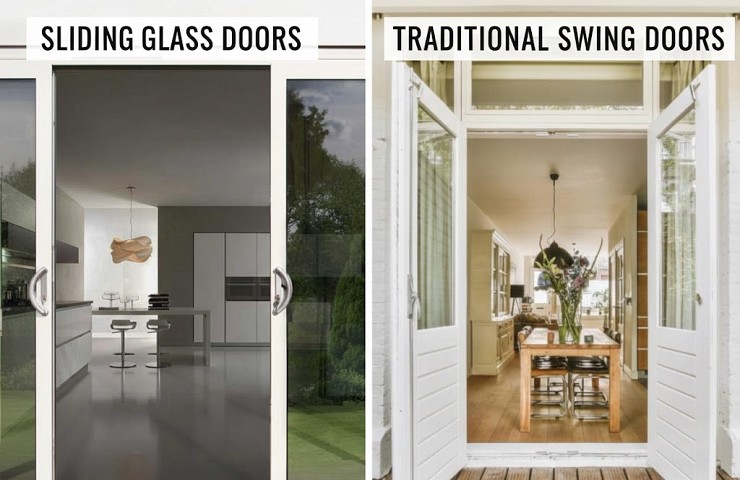
If you’re updating your home’s interior, doors are one of those “small” choices that quietly change everything.
Two of the most common options are indoor sliding glass doors and traditional swing (hinged) doors. Sliding doors are often picked for space-saving and a modern, airy look. Swing doors are still the default because they’re simple, familiar, and usually better at closing off sound and visibility.
What Are “Indoor Sliding Glass” vs “Swing” Doors?
Indoor sliding glass doors
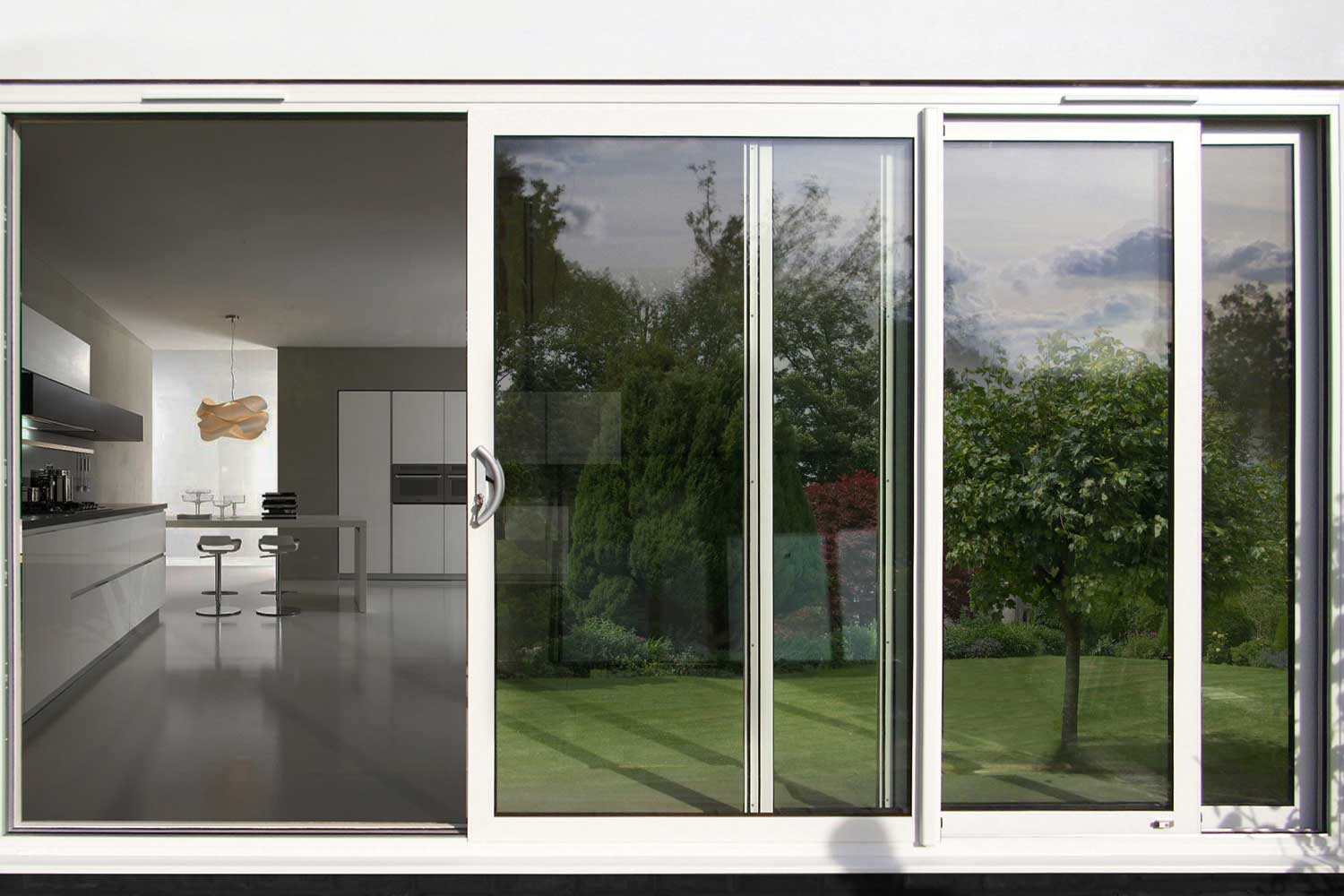
These are doors that open by sliding sideways instead of swinging in or out. Indoors, they’re most often used to divide spaces without making rooms feel closed off.
Common indoor sliding styles:
Top-hung sliders: The door hangs from a track above and glides smoothly.
Barn-style sliders: A visible track and hardware; popular for modern/farmhouse looks.
Pocket doors: The door slides into the wall (great for tight spaces, but more renovation work).
Bypass sliders: Two panels slide past each other; often used for closets.
Where people use them indoors:
Home office / den dividers
Dining room or living room separation
Closets and laundry rooms
Pantries or storage rooms
Modern bedroom entrances (less common if privacy is a priority)
Traditional swing doors (hinged doors)
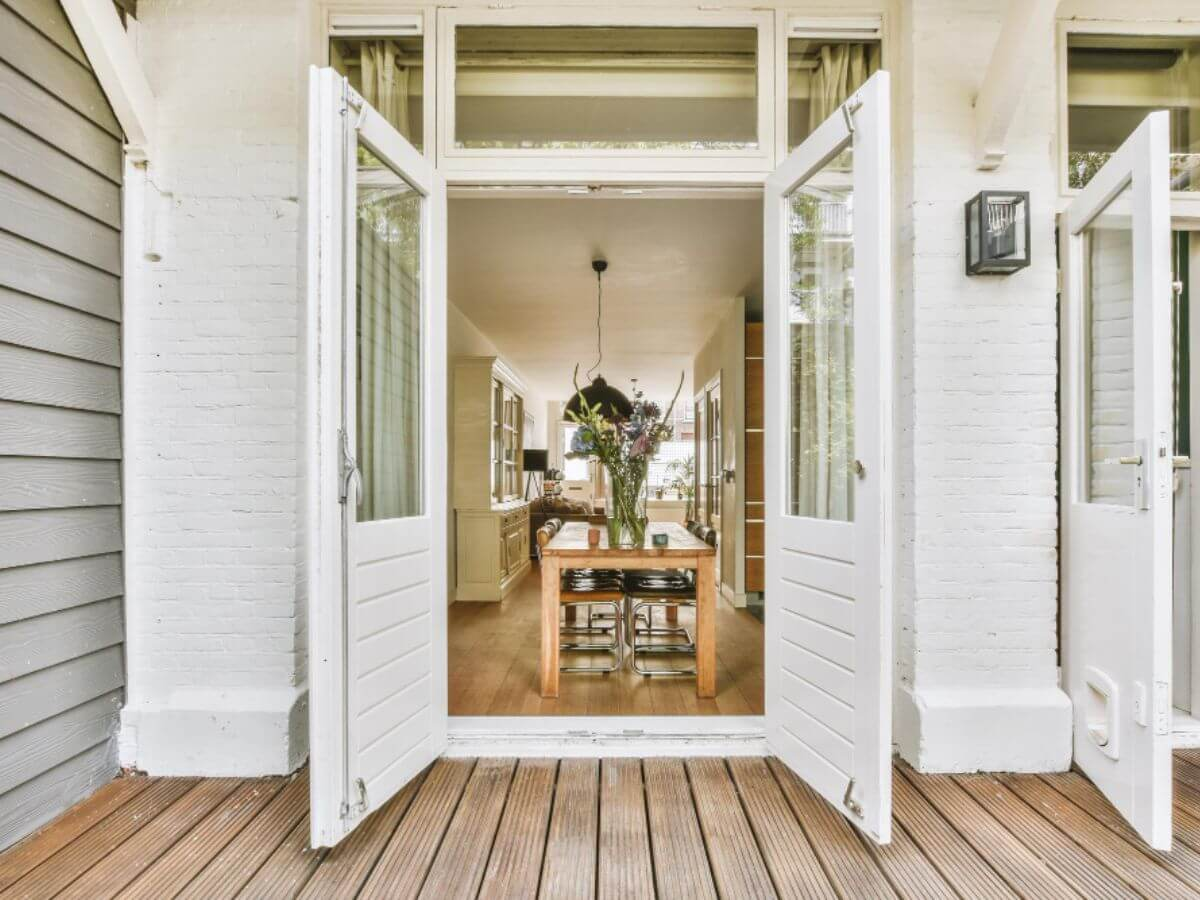
Swing doors are the classic style: they open on hinges and swing inward or outward.
Common swing styles:
Single hinged doors: Standard interior doors.
Double doors / French doors: Often used for offices, dining rooms, or larger openings.
Inswing vs outswing: Most interior doors are inswing; outswing is less common indoors.
Where people use them indoors:
Bedrooms and bathrooms
Hallway doors
Utility rooms
Any space where “close it properly” matters
At-a-Glance Comparison Sliding Glass vs Swing Doors
Here’s the quick overview before we go deeper:
Feature | Indoor Sliding Glass Doors | Traditional Swing Doors |
|---|---|---|
Space needed to open | Minimal floor clearance (slides sideways) | Needs clearance for the swing arc |
Best for small rooms | Usually better (no door “swing zone”) | Can feel tight in narrow rooms/hallways |
Privacy | Depends on glass type & system; often less private | Generally stronger privacy when closed |
Sound control | Can be weaker (small gaps/track design) | Usually better sealing and sound dampening |
Natural light | Excellent (especially clear or frosted glass) | Varies; solid doors block light |
Day-to-day convenience | Smooth for dividing rooms; great for flow | Simple, familiar, easy to latch shut |
Maintenance | Track/rollers need occasional cleaning | Hinges/latch alignment over time |
Renovation complexity | Barn/top-hung = simpler; pocket doors = more work | Often easiest to install/replace |
Best use cases | Offices, room dividers, closets, modern interiors | Bedrooms, bathrooms, anywhere privacy matters |
Space & Layout : The Biggest Practical Difference
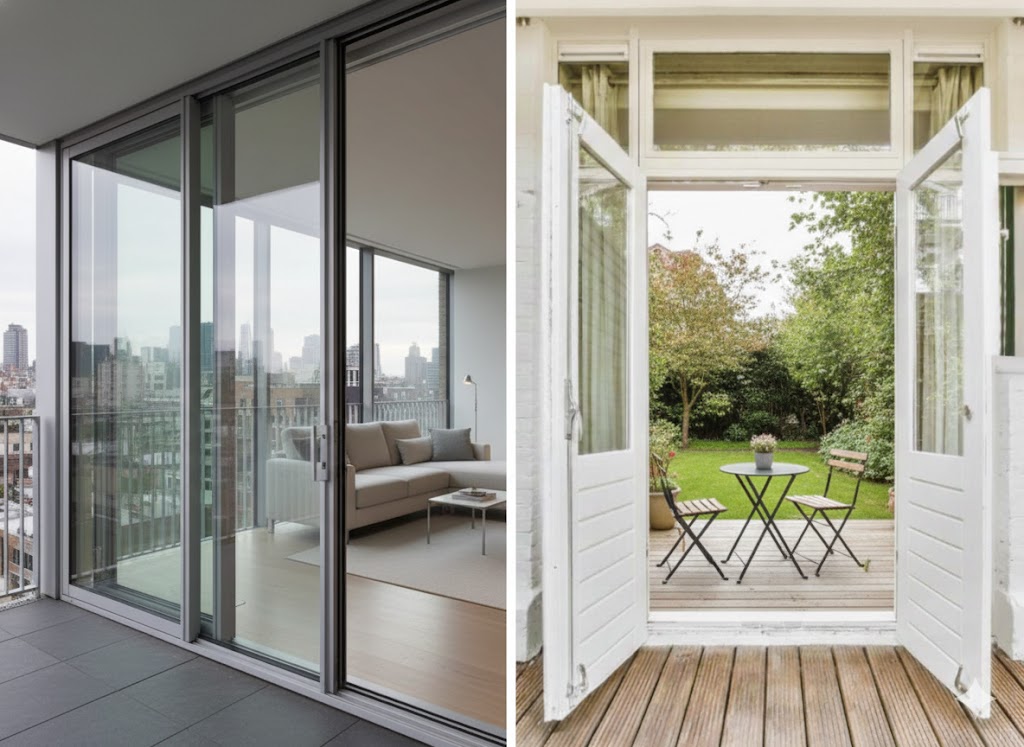
In tight hallways, small bedrooms, or awkward corners, how a door opens affects your layout more than its style.
Swing doors need a clear swing path, which can make narrow areas feel cramped, force furniture to sit farther back, and even cause nearby doors to bump into each other (common in condos and older homes). They also create a “dead zone” behind the door where shelves, hooks, or decor aren’t practical.
Sliding doors avoid that swing clearance, so you usually gain usable floor space, smoother traffic flow, and fewer layout compromises. But they still need the right kind of room: barn/top-hung sliders require open wall space beside the opening, pocket doors require an empty wall cavity (often more renovation), and bypass sliders need enough width for overlapping panels.
A quick check helps: if the doorway is near a corner or stair landing, sliding often works better; if you’ll place furniture close to the door, sliding helps; if there’s no open wall beside the opening, barn sliders may not work; and if the wall has switches, vents, or wiring, pocket doors can be tricky.
Natural Light, Openness, and Sightlines
This is where indoor sliding glass doors really stand out. They can make a home feel brighter and more connected; especially in spaces that don’t get much daylight.
What sliding glass changes visually
Because the door itself is glass, it:
Shares light between rooms (great for darker hallways)
Makes spaces feel larger
Creates a clean “divider” without making a room feel closed off
Many homeowners choose frosted or textured glass to keep the brightness while softening visibility.
What swing doors do better visually
Swing doors are usually:
Solid or mostly solid
More traditional in appearance
Better at creating a clear boundary between spaces
If you’re trying to keep a room feeling separate: like a bedroom, bathroom, or storage area; a swing door’s solid panel can actually feel more comfortable.
Best indoor spots for glass doors
Sliding glass doors work especially well for:
Home offices (light + modern look)
Dining rooms / living rooms as flexible dividers
Dens or sitting rooms
Hallway-to-room transitions where you want brightness
Privacy and Sound Control
This is the part people often notice after living with the door for a few weeks.
Swing doors usually win for privacy
A hinged door closes firmly into a frame, so you usually get:
Better “true closure”
Stronger privacy
Better sound blocking (especially with solid-core doors)
That’s why swing doors are still the go-to for:
Bedrooms
Bathrooms
Nurseries
Any room where you take calls, study, or need quiet
Sliding doors can be privacy-friendly, but it depends
Some sliding door systems have small gaps around the edges (it varies by design and quality), which can reduce:
Sound control
Visual privacy (especially with clear glass)
But you can improve this a lot with the right choices:
Frosted/etched glass for privacy while keeping light
Solid sliding panels instead of glass where privacy is the priority
Higher-quality track systems that close more tightly
Soft-close hardware for a more secure, finished “shut” feel
Rule of thumb:
If privacy and quiet are top priority, swing doors are usually the safer pick. If light and openness matter more, sliding glass can be perfect; especially with frosted glass.
If you want, I’ll continue with the next three sections: Ease of Use & Accessibility, Durability & Maintenance, and Installation Complexity (retrofit vs renovation).
Daily Comfort: Ease of Use & Accessibility
In day-to-day life, the “best” door is the one that feels effortless.
Sliding doors are great when you want a clean pass-through without worrying about a door swinging into people, furniture, or tight hallways. They can feel especially convenient in high-traffic areas like a kitchen-to-dining transition, a home office opening, or a laundry area where your hands are often full.
Swing doors are more straightforward when you need a firm close. They’re intuitive for privacy; close it, latch it, done. That’s one reason they still dominate bedrooms and bathrooms. If accessibility is a concern, double swing doors can also give you a wider opening, while pocket doors can be excellent for saving space; if the home is set up to handle the wall work.
Durability & Maintenance Over Time
Both door types can last a long time, but they “age” differently.
Sliding doors rely on hardware that glides: tracks, rollers, and alignment. Over time, the most common annoyance is that the track collects dust and the slide doesn’t feel as smooth. In many cases, a simple cleaning and minor adjustment brings it back to normal, but it does require occasional attention to keep that premium feel.
Swing doors are mechanically simpler. Hinges can loosen slightly, and doors can start to rub or sag if the frame shifts or if the door is heavier. The fix is usually basic—tighten hinges, adjust the latch plate, or correct alignment—so homeowners often find swing doors lower-effort overall.
If your priority is “set it and forget it,” swing doors tend to be easier. If you love the look and flow of a sliding system, just plan for light upkeep.
Installation Complexity and Renovation Fit
This is where your project scope matters: are you swapping a door, or changing how the opening works?
Swing doors are usually the easiest to replace because most homes are already built for them. If the frame is in good shape, it’s often a straightforward update with minimal disruption.
Sliding doors vary. A surface-mounted slider (like a modern top-hung or barn-style setup) can be installed without opening the wall, which makes it a popular upgrade. Pocket doors are the opposite: they often require opening the wall, working around electrical or plumbing, and rebuilding the pocket cavity properly. They can look amazing and save space, but they’re typically the most renovation-heavy option.
So if you want the simplest path, swing doors win. If you’re comfortable with a bit more planning for a bigger design payoff, sliding; especially non-pocket systems, can be a very practical upgrade.
Cost Comparison
Think of cost in 3 layers:
The door itself (material + glass type)
The hardware (hinges vs track/rollers/soft-close)
The labour (simple swap vs construction work)
How swing doors usually price out
Swing doors are often the more predictable choice because most homes are already built for them. If you’re replacing an existing hinged door with another hinged door, it’s typically a straightforward install; so labour stays controlled. Costs rise mainly when you upgrade to solid-core doors, premium finishes, or custom sizing.
How sliding doors usually price out
Sliding doors vary a lot more. A surface-mounted slider (top-hung/barn-style) typically costs more than a basic swing door because the track system is a larger part of the package. If you add soft-close hardware, heavier glass, or premium rollers, pricing climbs; but so does the smoothness and “high-end” feel.
Pocket doors (the hidden cost factor)
Pocket doors often end up higher because you’re paying for wall work: reframing the opening, creating the pocket cavity, then repairing drywall, trim, and paint. The door isn’t the main cost; the renovation is.
Simple rule to remember
Most budget-friendly / predictable: Swing door replacement
Mid-range upgrade with style payoff: Surface-mounted sliding system
Highest project scope (cleanest look): Pocket door