Woodgrain vs Smooth Fiberglass Doors: Beyond Appearance
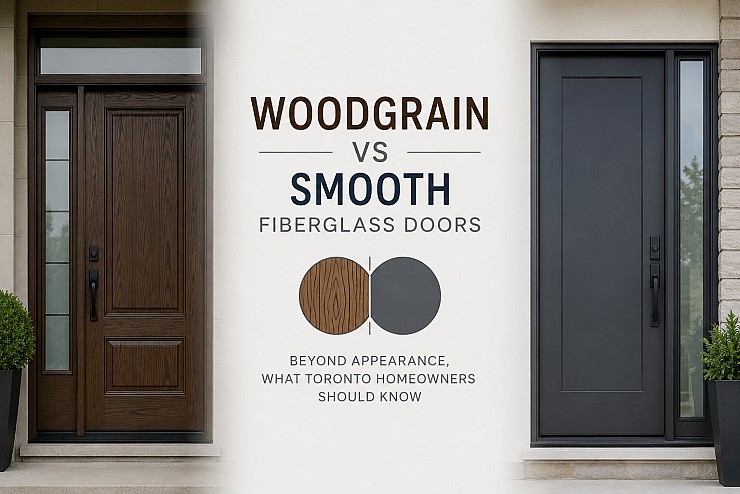
When shopping for a new entry door, one of the first choices you'll make is whether to select a woodgrain or smooth fiberglass door. At first glance, the difference seems purely aesthetic—one resembles natural wood, while the other offers a clean, modern surface.
In reality, the finish affects more than appearance. It can influence maintenance, refinishing options, how the door ages over time, and how it complements your home's architecture. While both options are built using similar fiberglass construction, understanding the characteristics of each finish helps you make a better long-term investment.
If you're exploring fiberglass doors in Toronto, this guide explains the differences from a technical perspective, helping you choose a door that fits both your home and Toronto's demanding climate.
Understanding Fiberglass Door Construction
Before comparing finishes, it's important to understand that the structural construction of both doors is generally the same.
A quality fiberglass entry door typically includes:
- Compression-moulded fiberglass skins
- An insulated polyurethane foam core
- Reinforced stiles and rails for structural strength
- Composite or engineered framing components
- High-performance weatherstripping
- Durable exterior coatings designed for Canadian weather
The woodgrain or smooth finish is applied to the outer fiberglass skin, not the internal structure. This means the finish itself has very little impact on the door's insulation or structural performance.
How Woodgrain Fiberglass Doors Are Manufactured
A woodgrain fiberglass door isn't simply painted to look like wood. During manufacturing, fiberglass skins are moulded using textured patterns that replicate the grain and depth of real hardwood species such as oak or mahogany.
Once moulded, the surface is finished with stains or specialized coatings that highlight the texture and create a realistic wood appearance.
The result is a door that delivers the visual warmth of timber without many of the issues associated with natural wood, such as warping, swelling, or frequent refinishing.
For homeowners who appreciate traditional architecture but want modern performance, woodgrain fiberglass doors offer a practical balance.
What Makes Smooth Fiberglass Doors Different?
Smooth fiberglass doors use the same insulated core and fiberglass construction but feature a flat, uniform exterior surface.
Instead of mimicking wood, these doors are designed primarily for painted finishes. Their clean appearance makes them popular in contemporary homes where simple lines and minimal detailing are preferred.
Because the surface lacks texture, smooth fiberglass doors provide an excellent base for modern colours such as black, charcoal, white, navy, or custom painted finishes.
Woodgrain Finish
- Moulded texture replicates real wood grain
- Stained or coated for depth and warmth
- Hides minor scratches and imperfections
- Ideal for traditional and rustic homes
- Low maintenance with realistic appearance
Smooth Finish
- Flat, uniform exterior surface
- Designed for painted finishes
- Clean, modern aesthetic
- Easy to repaint or change colours
- Ideal for contemporary and minimalist homes
Does the Finish Affect Energy Efficiency?
This is one of the most common misconceptions among homeowners.
The answer is no.
Whether you choose a woodgrain or smooth finish, energy efficiency depends on factors such as:
- The insulated core
- Weatherstripping quality
- Glass insert performance
- Air infiltration ratings
- Installation quality
- Proper sealing around the frame
The exterior texture does not significantly change the thermal performance of the door.
If energy efficiency is your priority, pay closer attention to the door's specifications and installation rather than the finish itself.
Performance in Toronto's Climate
Toronto experiences freezing winters, humid summers, heavy rainfall, and frequent freeze-thaw cycles. Exterior doors must withstand significant seasonal changes throughout the year.
Both woodgrain and smooth fiberglass doors perform well because fiberglass is naturally resistant to:
- Rust
- Rot
- Moisture absorption
- Warping
- Expansion and contraction commonly seen in wood
Woodgrain Finish
The textured surface tends to disguise light scratches, fingerprints, and minor surface imperfections. Because the texture creates subtle variations in light reflection, everyday wear is often less noticeable.
Smooth Finish
Smooth surfaces create a sleek appearance but may show scratches, dust, or fingerprints more readily, particularly on darker paint colours. Fortunately, smooth finishes are generally easier to repaint if homeowners decide to refresh the appearance years later.
UV Exposure and Colour Retention
Sun exposure affects every exterior door regardless of material.
Homes with south-facing or west-facing entrances receive greater ultraviolet exposure throughout the year. Over time, prolonged sunlight may gradually fade paint or stain finishes.
The finish itself is not usually the deciding factor, the quality of the factory-applied coating is.
Premium fiberglass entry doors use durable exterior coatings designed to resist: UV fading, peeling, cracking, and moisture penetration.
If your entry receives direct sunlight for most of the day, selecting lighter colours or ensuring periodic maintenance can help preserve the finish longer.
Maintenance Requirements
One reason many homeowners choose fiberglass entry doors Toronto is their low maintenance compared with traditional wood doors.
| Maintenance Task | Woodgrain Fiberglass | Smooth Fiberglass |
|---|---|---|
| Regular Cleaning | Mild soap and water | Mild soap and water |
| Scratch Visibility | Less noticeable (texture hides wear) | More visible on dark colours |
| Refinishing Ease | Requires textured-surface products | Easier to repaint |
| Colour Change | More complex (stain vs paint) | Straightforward |
| Typical Maintenance | Inspect protective coatings | Inspect caulking and paint |
Which Finish Better Matches Different Home Styles?
Architecture often influences the best choice.
Woodgrain Complements:
- Traditional brick homes
- Craftsman designs
- Colonial homes
- Tudor architecture
- Rustic exteriors
Smooth Complements:
- Contemporary homes
- Modern custom builds
- Minimalist architecture
- Urban renovations
- Homes with large glass windows
Rather than following current trends, choosing a finish that complements your home's overall design usually provides the best long-term curb appeal.
Can You Repaint or Refinish Both?
Yes, but there are differences.
Smooth fiberglass doors are generally easier to repaint because of their uniform surface.
Woodgrain fiberglass doors can also be refinished, but maintaining the realistic wood appearance often requires products specifically designed for textured fiberglass surfaces. Homeowners who wish to change from a stained appearance to a painted finish should follow the manufacturer's recommendations.
Which Finish Lasts Longer?
Contrary to popular belief, one finish does not automatically outlast the other.
When manufactured to high standards and professionally installed, both woodgrain and smooth fiberglass doors can provide decades of reliable performance.
Longevity depends far more on factors such as:
- Manufacturing quality
- Protective exterior coatings
- Professional installation
- Proper flashing and sealing
- Routine maintenance
- Exposure to harsh weather
The finish primarily affects appearance and maintenance—not the structural lifespan of the door itself.
Choosing a Quality Fiberglass Door Matters More Than the Finish
The biggest difference in long-term performance often comes from who manufactures and installs the door, rather than whether the surface is smooth or textured.
When comparing door manufacturers in Toronto, consider factors such as:
- Energy-efficient door systems
- High-quality insulated cores
- Durable weatherstripping
- Custom sizing options
- Professional installation
- Warranty coverage
If you're planning a complete exterior renovation, many windows Toronto manufacturers also offer matching entry doors and window systems, helping create a cohesive appearance while improving overall energy efficiency.
Homeowners outside Toronto looking for fiberglass doors in Vaughan should also look for manufacturers that prioritize quality construction and experienced installation rather than focusing solely on appearance.
Making the Right Choice for Your Home
Choosing between woodgrain and smooth fiberglass doors isn't about finding a universally "better" finish, it's about selecting the one that best suits your home's architecture, maintenance expectations, and personal style.
If you appreciate the warmth and character of natural wood without the ongoing upkeep, a woodgrain finish is an excellent choice. If your home features contemporary design and you prefer clean lines with flexible paint options, a smooth fiberglass door may be the better fit.
Regardless of the finish you choose, investing in a well-built fiberglass door with professional installation will have the greatest impact on durability, energy efficiency, and long-term performance. For Toronto homeowners, understanding the engineering behind the door, not just its appearance, is the key to making a confident and informed decision.
Find Your Perfect Fiberglass Entry Door
Whether you prefer the warmth of a woodgrain finish or the clean look of a smooth surface, Delco Windows & Doors offers premium fiberglass entry doors designed for Canadian weather.
Our team helps you choose the right finish, style, and glass configuration to complement your home's architecture while maximizing energy efficiency and durability.
Frequently Asked Questions
Which fiberglass door finish is more durable?
Both finishes are equally durable when manufactured with quality materials and protective coatings. The finish affects appearance and maintenance, not structural lifespan. Proper installation and regular care are the biggest factors in long-term durability.
Can I paint a woodgrain fiberglass door?
Yes, but it requires proper surface preparation and products designed for textured fiberglass. If you plan to paint, a smooth finish is generally easier to work with. Always follow the manufacturer's recommendations for best results.
Does a woodgrain finish cost more than smooth?
Premium woodgrain finishes with detailed staining may cost slightly more due to the additional manufacturing steps. However, the price difference is usually modest compared to the overall door investment.
Which finish is better for a south-facing entrance?
Both finishes perform well with quality UV-resistant coatings. Lighter colours tend to show less fading over time, regardless of texture. If choosing a dark colour, ensure the door uses premium exterior-grade paint or stain with UV inhibitors.